
The government has withdrawn most provisions of the emergency natural gas supply regulation order imposed during the West Asia conflict after liquefied natural gas (LNG) shipments through the Strait of Hormuz resumed following a ceasefire.
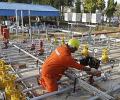
Ongoing strategic investment into assets abroad, alongside gas purchases being made by India, will soon allow the country to access as much gas as it needs, Petroleum and Natural Gas Minister Hardeep Singh Puri said on the sidelines of India Energy Week (IEW 2025).
The government should bring natural gas under the Goods and Services Tax (GST) regime to realise Prime Minister Narendra Modi's vision for a gas-based economy and raising the share of the environment-friendly fuel in India's energy basket, an industry body that represents the likes of Reliance Industries as well as state-owned firms, has said. Natural gas is currently outside the ambit of GST, and existing legacy taxes -- central excise duty, state VAT, central sales tax -- continue to be applicable on the fuel. In its pre-Budget memorandum to the finance ministry, Federation of Indian Petroleum Industry (FIPI), which boasts of members from across the oil and gas spectrum, also demanded rationalisation of GST on transportation of natural gas through pipeline as well as on re-gasification of imported LNG to help bring down cost of the environment friendly fuel.

Prime Minister Narendra Modi on Thursday discussed with a group of senior ministers the prevailing global security situation and how to maintain supply chain uninterrupted despite conflicts in different zones, including the Strait of Hormuz, the Black Sea, the Red Sea, and the Gulf of Aden.

Petrol pump dealers seek exemption from the proposed 5 UPI charge on fuel purchases above 2,000, citing pressure on their margins.
The company is also looking to expand the supply of gas by roads and is evaluating creation of small storage hubs along the highways.

US President Donald Trump is expected to sign the Lindsey O. Graham Sanctioning Russia and Iran Act of 2026 later on Friday (local time). A White House official confirmed the development to ANI without revealing further details.
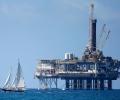
State-run Oil and Natural Gas Corporation (ONGC) Ltd reported a 112 per cent year-on-year increase in standalone net profit for Q1 FY27, reaching 17,034 crore, primarily due to higher crude oil prices and increased realisations from new well gas. Despite a consolidated net profit decline due to HPCL's losses, ONGC's core upstream business showed robust growth.
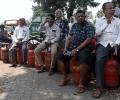
India restricts subsidised LPG connections for households with piped natural gas (PNG) to ensure equitable distribution and address global energy supply concerns, pushing for faster PNG adoption.

'If crude remains above $100 per barrel, with restricted retail-price increases, OMCs could face negative petrol and diesel marketing margins, higher LPG under-recoveries, higher crude-landing, freight and insurance costs, working capital and debt accumulation and inventory losses if crude subsequently corrects sharply.'


Researchers at IIT Kanpur have found that 20 per cent ethanol-blended petrol (E20) does not significantly reduce fuel efficiency or harm vehicle engines, contradicting social media claims and providing reassurance amidst its nationwide rollout. The study supports the Oil Ministry's stance on E20's benefits.
The government may levy a cess on domestically produced natural gas to fund construction of gas pipeline network, Petroleum Secretary R S Pandey said on Wednesday.
India's wholesale price inflation surged to 3.88 per cent in March, marking the fifth consecutive monthly increase, primarily driven by a sharp rise in crude petroleum, natural gas, and manufactured items amidst the West Asia crisis.

India's wholesale price inflation surged to 8.30 per cent in April, up from 3.88 per cent in March, primarily driven by a significant increase in the prices of fuel, power, and crude petroleum, according to data from the commerce and industry ministry.
Questioning the idea of market-determined prices for natural gas favoured by the petroleum ministry, the Planning Commission said on Tuesday that given the shortage of the fuel, the government had a role to play.

The draft note proposes raising gas price for ONGC to Rs 3,765 per thousand cubic meters from current Rs 3,200 per thousand cubic metre. For OIL, the gas price has been proposed at Rs 4,205 per thousand cubic metres. The price would change by Rs 55 per thousand cubic metre for every 10 points change in Wholesale Price Index.
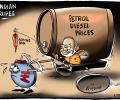
5 commodities namely crude oil, natural gas, petrol, diesel, and aviation turbine fuel (ATF) were kept out of GST's purview given the revenue dependence of state governments on these sectors.
Defying high court orders, oil PSU executives on Wednesday stopped work forcing stoppage of natural gas supplies to industries on the nation's main trunk pipeline but aviation services and fuel supplies continued to be normal.

PNGRB, the oil regulator, which as per its enacting legislation has powers to levy fee, has levied a minimum tax of Rs 2 crore per annum on turnover that companies like GAIL and Reliance Industries earn from selling CNG to automobiles and piped natural gas to households and industries.
A tripartite pact -- amid the promise of removing AFSPA from almost all of the North East -- revives hydrocarbon exploration along the Assam-Nagaland border after decades of dormancy.

The government is identifying households with both liquefied petroleum gas (LPG) and piped natural gas (PNG) connections to enforce a ban on dual ownership, aiming to curb misuse and better target subsidies amid global energy supply disruptions.

The Supreme Court has dismissed a Public Interest Litigation (PIL) seeking mandatory and uniform labelling of ethanol percentage in petrol at fuel pumps. The petitioner, Narendra Kumar Goswami, was advised to approach the jurisdictional high court for relief, with the Attorney General arguing it was a proxy litigation.

The Supreme Court is set to hear a petition seeking mandatory and uniform labelling of ethanol percentage at petrol pumps and a public database on vehicle compatibility with ethanol-blended fuel. The plea also calls for an expert committee to assess the impact of E20 fuel on vehicles, environment, and food security, and a consumer disclosure protocol.
India is significantly expanding its crude oil sourcing to Latin America, with Venezuela emerging as a major supplier, as geopolitical disruptions in the Middle East and the Strait of Hormuz compel the world's third-largest oil consumer to diversify its energy supplies.
Petroleum minister Murli Deora discussed the idea of levy of $0.20 per million British thermal unit as cess on natural gas to mop up Rs 3,000 crore (Rs 30 billion) annually for laying down the gas pipeline network with CEOs of state-run firms. The brainstorming session called to chalk out the 100-day plan for the new government also decided on launching a new Scheme of Rural LPG Distributor (Gramin LPG Vitrak), petroleum secretary R S Pandey said.

The government has introduced a mandatory 25-day gap between LPG cylinder bookings due to supply concerns arising from global disruptions and tensions in the Strait of Hormuz. This measure aims to prevent hoarding and prioritise essential non-domestic sectors, while domestic LPG production is being increased to mitigate shortages.

State-run Oil and Natural Gas Corporation (ONGC) has approved the development of a 1.75 million tonnes (mt) strategic petroleum reserve (SPR) in Mangaluru, a project deemed of national importance, with plans for broad commercial utilisation.

The Bombay High Court has ordered major social media platforms, including Meta, X Corp, and Google LLC, to immediately remove 'vile, abusive, obscene, and defamatory' deepfakes and AI-generated content targeting Union Minister Nitin Gadkari, emphasising the urgent need for online platforms to curb malicious digital content.

Despite decades of efforts towards energy transition, oil will remain the critical energy source for all nations for some decades. We can hope for peace opening the Strait of Hormuz, but must prepare for war closing it, points out former foreign secretary Ranjan Mathai.

The Indian women's cricket team secured their eighth Women's Asia Cup title, defeating Sri Lanka by 72 runs in the final, a triumph that has garnered widespread congratulations from top Indian leaders.
The Union petroleum ministry has proposed a 44 per cent increase in prices of natural gas sold under the administered price mechanism by state-owned Oil & Natural Gas Corporation and Oil India Ltd.
Deora, who met Mukherjee on Monday afternoon to present his ministry's Budget wishlist, also discussed the deregulation of fuel prices.
India's power sector is undergoing a significant transformation, driven by a planned shift towards renewable energy and ambitious capacity expansion targets, with major players like NTPC, JSW Energy, Adani, and Tata Power prioritising predictable returns. However, execution challenges and valuation concerns remain critical factors for sustained growth.
The field operations are on in the sub-Himalayan terai region stretching from the Gorakhpur district in eastern UP to Bijnore district in western UP. The two companies were given prospecting licences sometime back, he informed. The licence allows the licence holder to undertake mineral substance prospecting works within a specific area.

The ongoing US conflict with Iran has cost the Trump administration an estimated $45.1 billion, according to a Pentagon estimate provided to the US Congress on Friday, CNN reported, citing two sources familiar with the matter.

Prime Minister Narendra Modi has highlighted the risks posed by the 'weaponisation' of resources and strategic sea routes, urging India to achieve greater self-reliance in energy to mitigate vulnerabilities to overseas supplies and geopolitical tensions.
